ANDOLL HOME 4L
9.0Editor score4L food capacity
Up to 8 meals
10-second voice recording
Dual power supply
Compare 10 top automatic pet feeders by capacity, portion control, app features, and reliability. Expert picks for cats, dogs, and multi-pet homes.
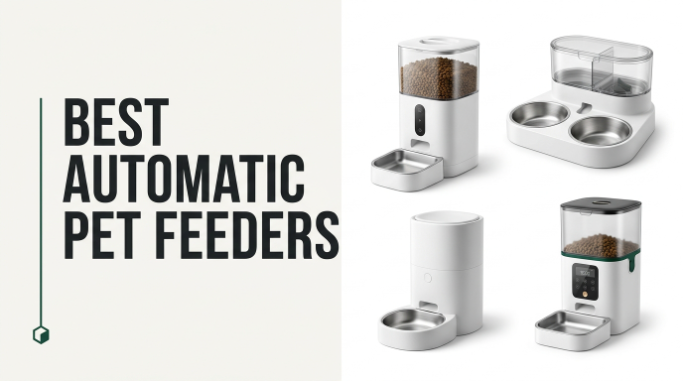
Choosing the right automatic pet feeder in 2026 comes down to matching hopper capacity, portion accuracy, power backup, and connectivity to your pet’s routine and your travel patterns. We compare 10 standout models across food storage volume, meal scheduling flexibility, anti-jam design, voice recording, camera and app features, cleaning ease, and long-term reliability so you can pick with confidence.
Automatic feeders range from simple timed dispensers to fully connected smart devices with cameras, two-way audio, and app-based scheduling. Some prioritize dead-simple operation with dial-based programming, while others put every feature behind a smartphone app. Understanding these differences saves you from buying a feeder that either overwhelms you or falls short of your needs.
This guide breaks down each option by the specs that actually matter to real buyers: capacity in cups, meals per day, portion granularity, power sources, bowl material, jam resistance, and whether the feeder suits a single cat, multiple pets, or a small dog. The goal is a well-matched purchase that becomes a reliable part of your pet care routine.
We compared 10 automatic pet feeders using the details that actually help a buyer decide: hopper capacity in cups, meals per day and portion granularity, anti-jam dispensing design, freshness features like desiccant packs and sealed lids, power options including battery backup, connectivity such as Wi-Fi and app control, camera and voice recording features, bowl material and cleaning ease, and owner feedback. The notes focus on real trade-offs so each pick connects to how people actually use these feeders for cats, small dogs, and multi-pet households.


Compare key features, scores, and current prices side by side. A shorter feature list means fewer details were available, not necessarily fewer capabilities.


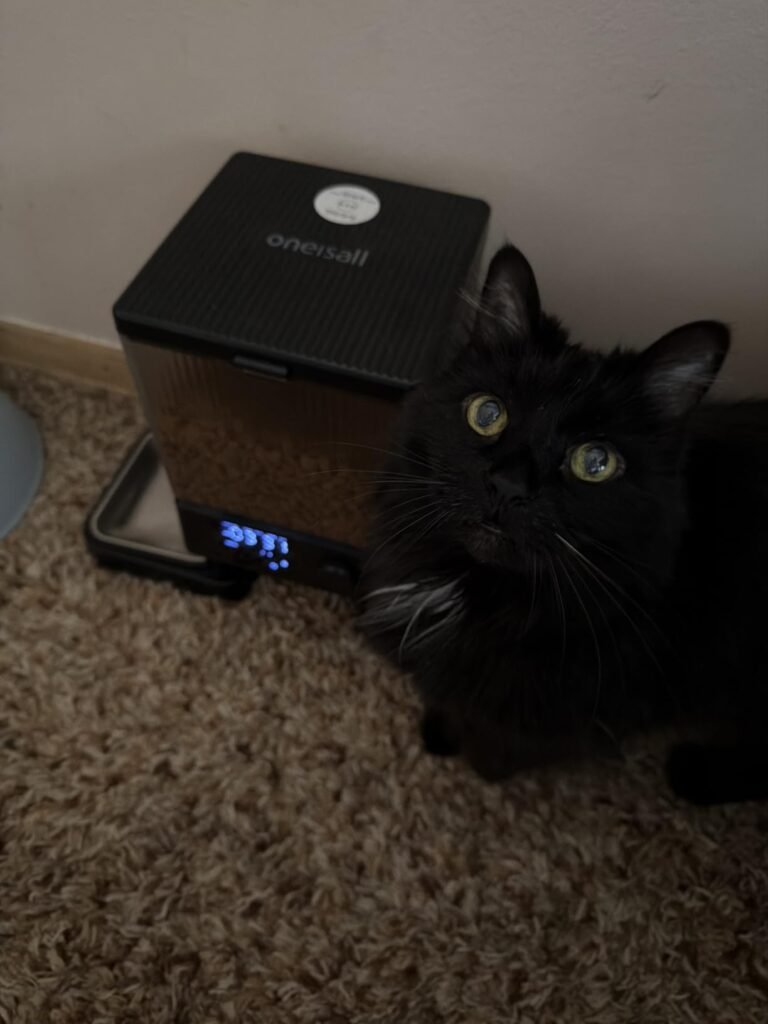
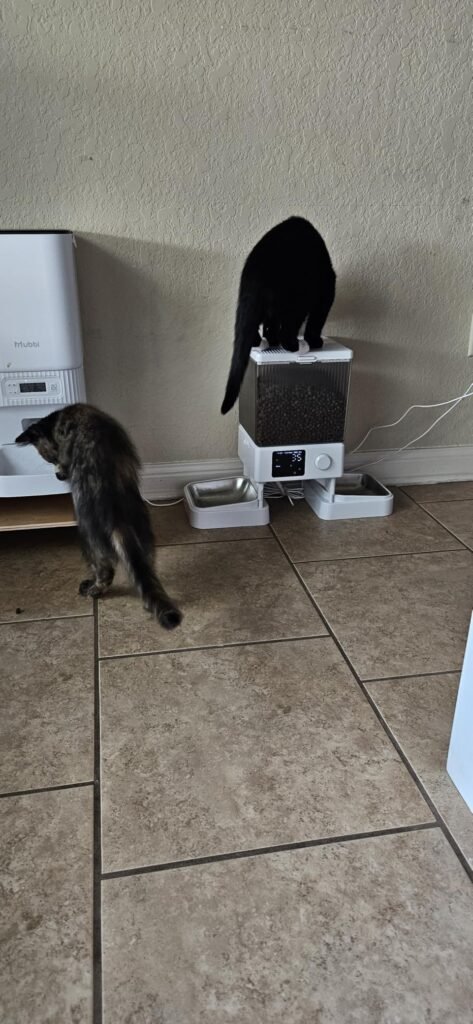
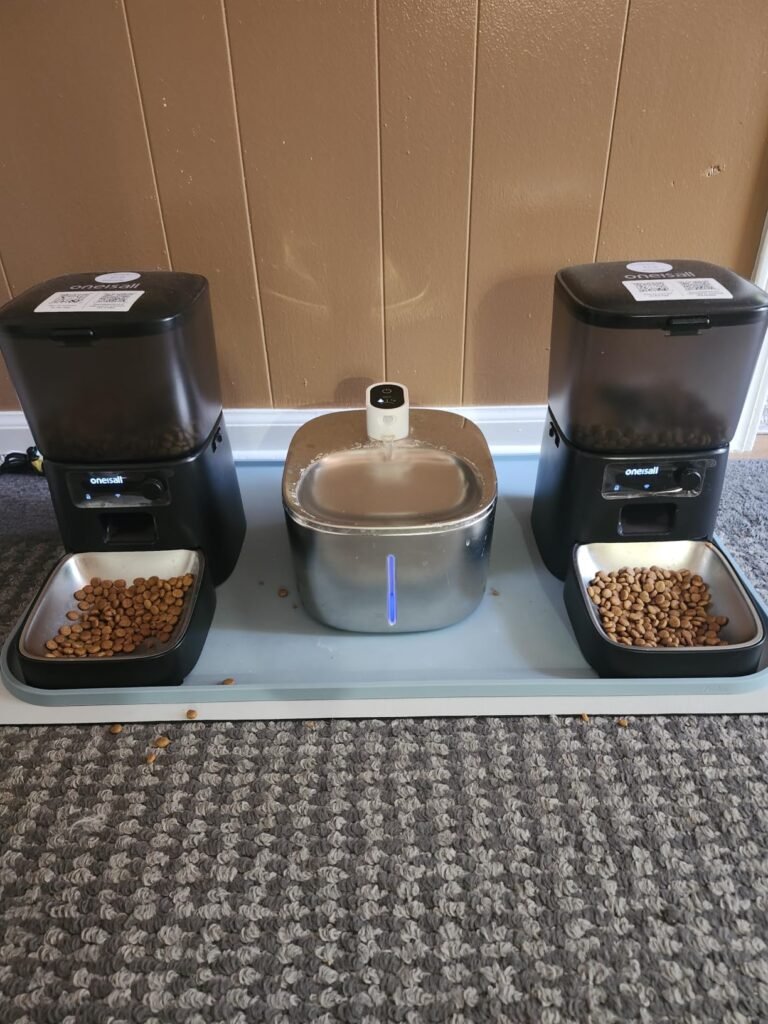
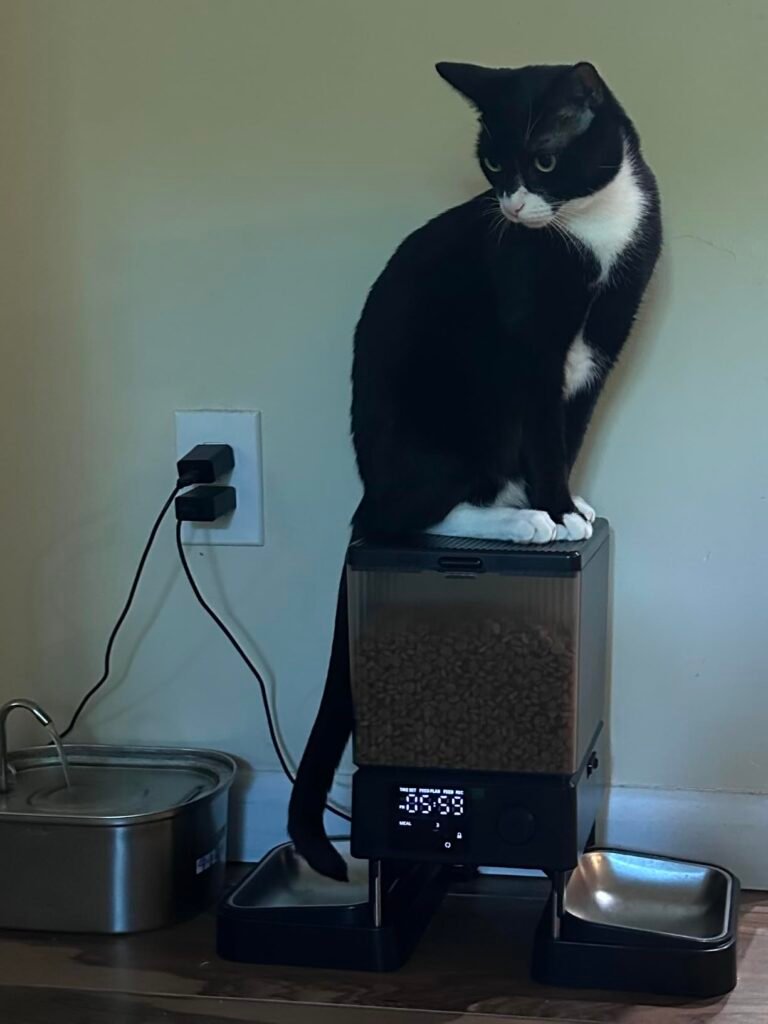
The oneisall Two-Cat Feeder solves a real problem for households with multiple cats: mealtime fighting and unequal food distribution. The twin-bowl design with bowls placed 16 inches apart creates comfortable individual eating spaces that reduce the queuing and competition that happens when two cats share a single bowl. For multi-cat homes, this design philosophy alone justifies the pick.
We may earn a commission when you buy through this link, at no additional cost to you.
The 5L hopper capacity translates to about 20 cups of dry food, which sustains two adult cats for roughly 10 days without refills. This makes the feeder practical for weekend trips and short vacations without requiring pet sitters solely for feeding. Each portion equals approximately 10 grams, and the feeder supports up to 6 meals per day with the total portion split evenly between the two bowls.
Setup uses a physical dial rather than an app or complex button sequence, which makes the feeder accessible to buyers who prefer straightforward operation without smartphone dependencies. The 10-second voice recording plays before each meal to call your cats, and the multi-layer sealing system with included desiccants keeps food fresh and crunchy. Food-grade stainless steel bowls are hygienic, prevent chin acne, and are dishwasher safe.
Cats are territorial about food and often experience stress when forced to share a single bowl, which can lead to guarding behavior, faster eating, and unequal food distribution. Placing bowls 16 inches apart lets each cat eat in their own space, which reduces conflict and lets slower eaters finish their meals without being crowded out. This is especially important for households where one cat tends to dominate the food dish, since the dominant cat often ends up overweight while the submissive cat undereats.
This feeder is the strongest overall pick in this guide for two-cat households and takes the Editor’s Choice for that specific use case. The kibble size limit of under 0.5 inches means you should verify your cat food fits before purchase. Single-cat households or homes with more than two pets should look at other options that better match their specific configuration.
Not for single-cat homes, households with more than two cats, or pets that eat large kibble.
We may earn a commission when you buy through this link, at no additional cost to you.
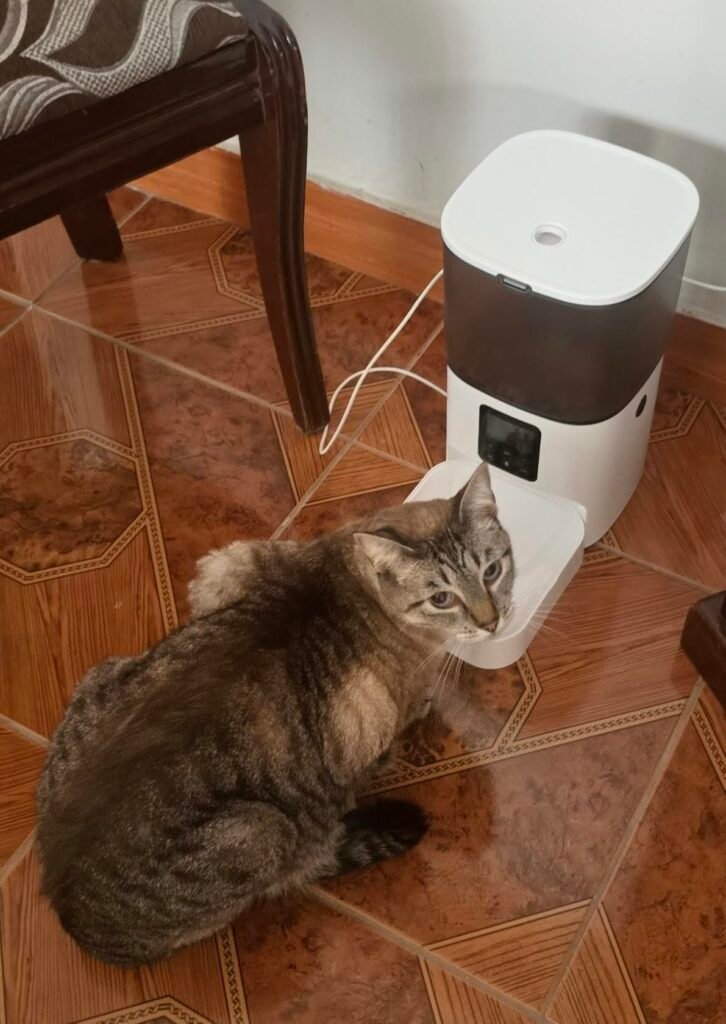
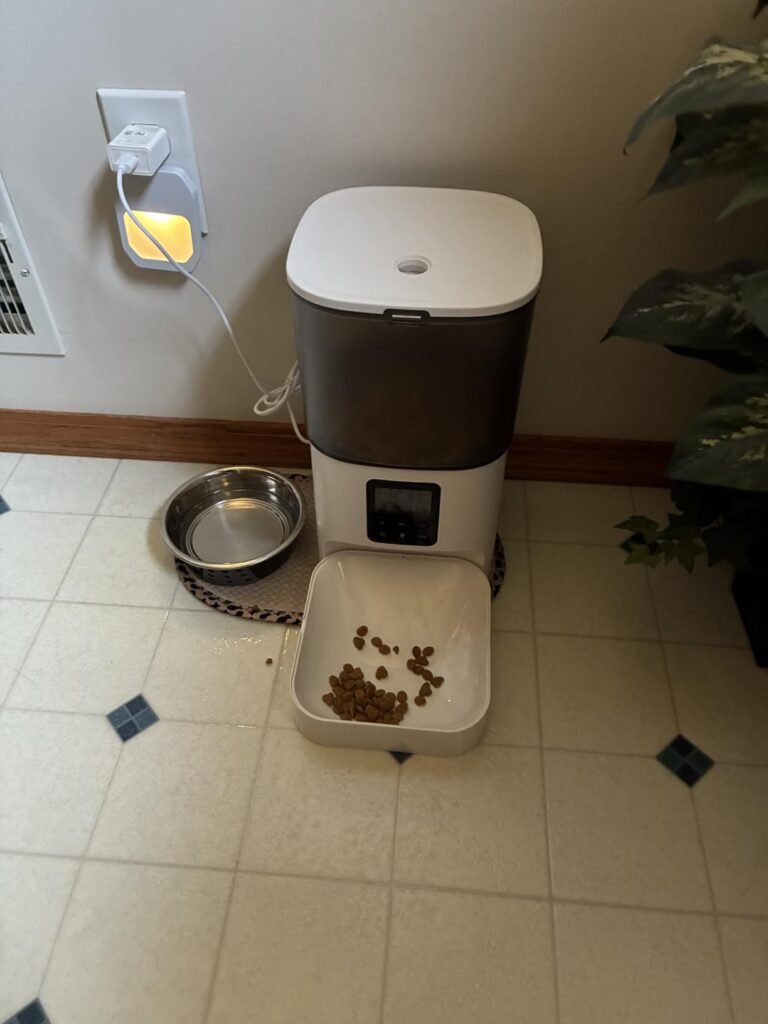
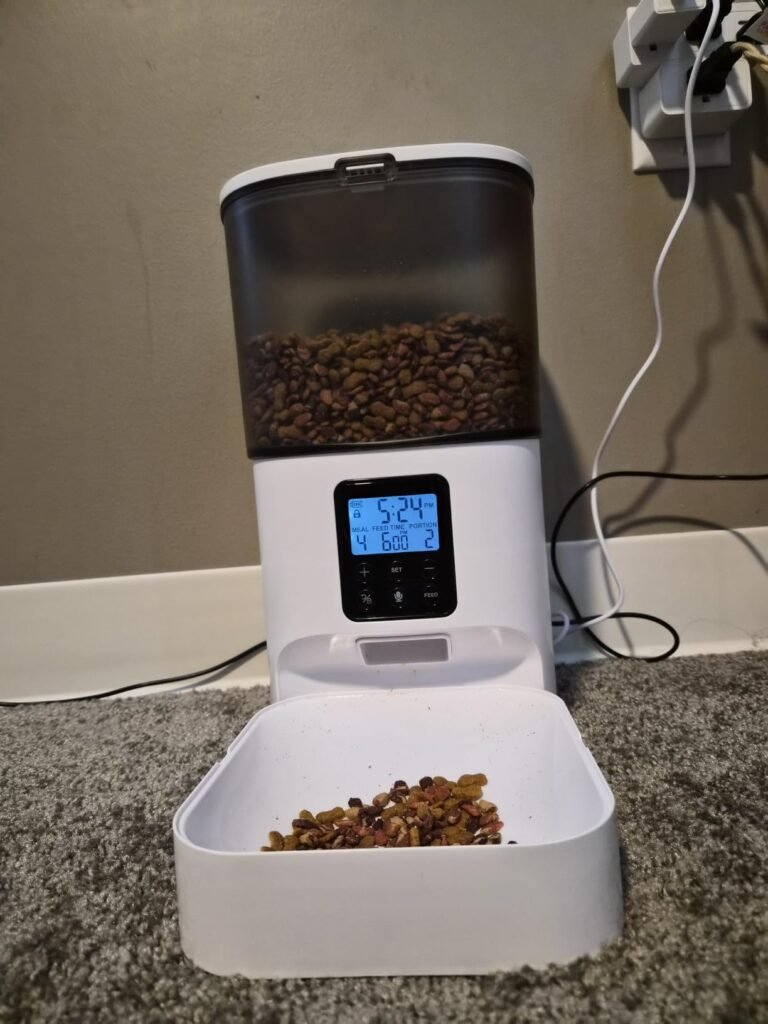
The ANDOLL HOME 4L is the pick for first-time buyers who want a reliable, straightforward feeder without paying for smart features they may not use. The programmable display handles up to 8 meals per day, which is more scheduling flexibility than most basic feeders offer at this price. For single-cat households or small dogs on regular feeding routines, this level of granularity covers nearly every practical need.
We may earn a commission when you buy through this link, at no additional cost to you.
The food dispensing system is engineered specifically to reduce the jamming issues that plague cheaper feeders. A swinging mechanism inside the dispenser keeps kibble moving smoothly from the hopper into the bowl rather than getting stuck in the chute. The 8-degree tilt on the feeding bowl is a small design touch that lets pets eat more comfortably by keeping food positioned toward the front of the bowl rather than sliding to the back.
Freshness is handled through a sealed lid with a dedicated desiccant placement box, which isolates the food from ambient air and moisture. The included desiccant absorbs residual humidity to prevent kibble from becoming stale or moldy during longer storage. The 10-second voice recorder plays your message three times at each feeding, which helps cats and dogs associate the sound with mealtime and can ease separation anxiety.
Dry pet food loses aroma and palatability when exposed to air and moisture over time, and stale kibble is one of the top reasons pets refuse meals from automatic feeders. A sealed lid combined with a dedicated desiccant compartment maintains the food’s freshness for weeks rather than days, which matters most when the hopper is not emptied quickly. This is a specification worth prioritizing if your pet is picky or if you fill the feeder infrequently.
This feeder is the right pick for buyers who prioritize simple, dependable operation over advanced connectivity. The dual power supply combining an AC adapter with AA battery backup ensures continued operation during outages, which is genuinely important for a feeder your pet depends on. Buyers who need remote monitoring, camera views, or multi-pet capacity should look at the Frienhund or oneisall two-cat models instead.
Not for buyers who need Wi-Fi remote control, camera monitoring, or capacity for multiple pets.
We may earn a commission when you buy through this link, at no additional cost to you.
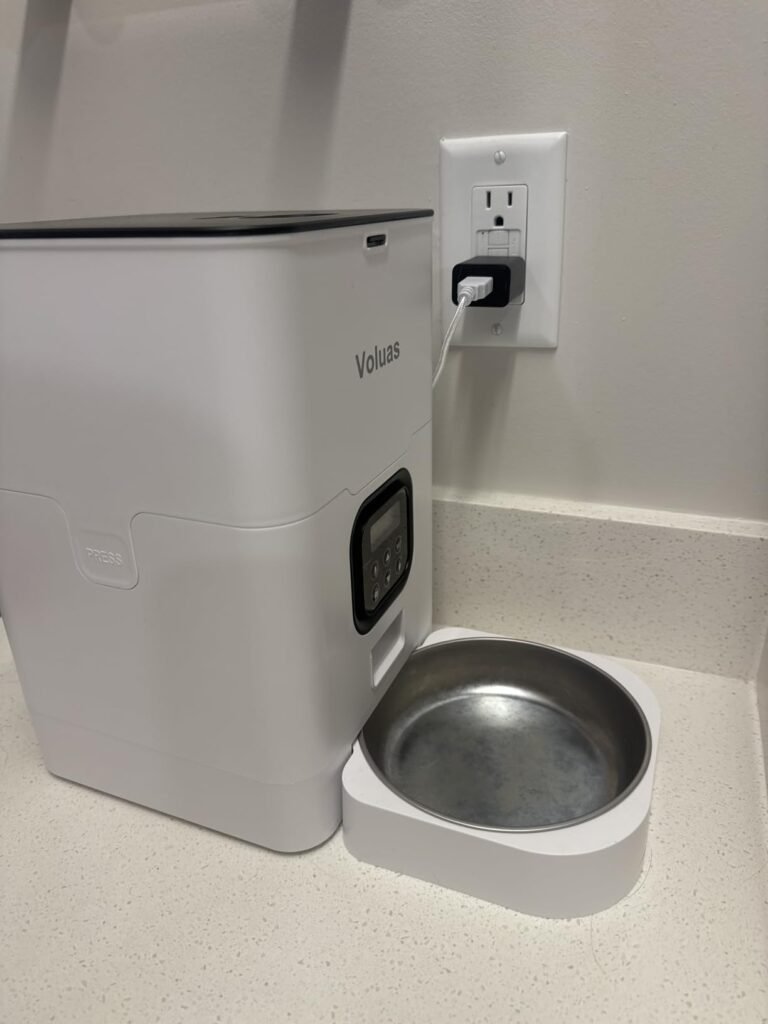
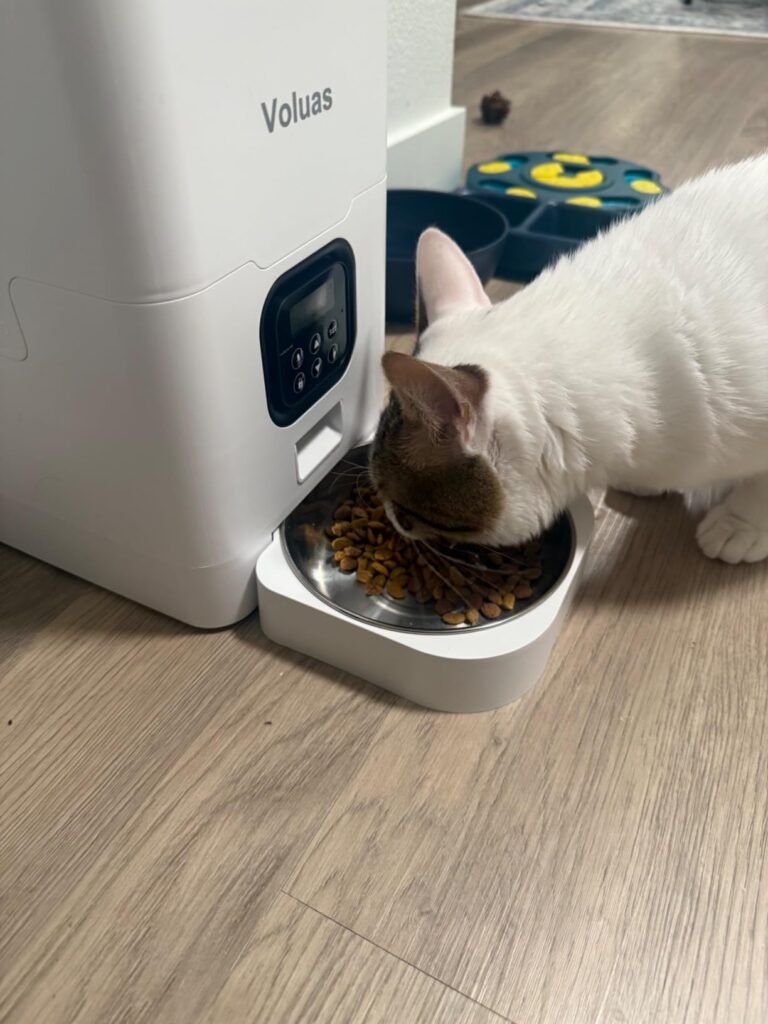
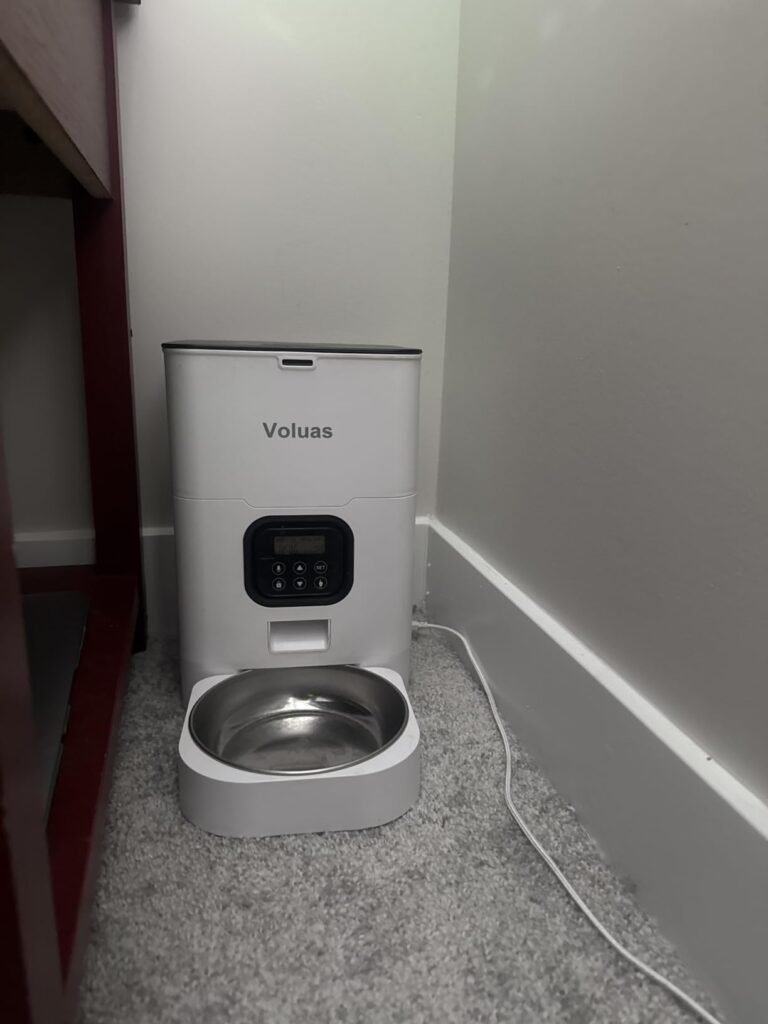
The VOLUAS 4L is the pick for buyers who need fine control over portion sizes rather than a large number of daily meals. The 0-40 portion range with each portion delivering approximately 6-7 grams lets you dial in exact quantities that match your pet's dietary needs. This precision matters most for pets on weight management plans or those with medical conditions requiring specific meal sizes.
We may earn a commission when you buy through this link, at no additional cost to you.
The 4L capacity translates to roughly 16.9 cups of dry food, which keeps most cats and small dogs comfortably fed through long weekends and short business trips. Meal scheduling maxes out at 4 meals per day, which suits most cats and dogs that eat on a normal daily rhythm. If your pet needs more frequent smaller meals, look at options with 6 or more scheduled meals per day.
The LCD screen makes setup and programming straightforward, and the removable parts allow proper cleaning between fills. The 10-second voice recording plays at mealtime to create a familiar sound cue that pets learn to associate with feeding, which can help reduce anxiety when you are away. Power options include a 5V USB adapter for wired operation and 3 D-cell batteries as backup during outages.
Pets on weight loss or medical diets often need precisely measured meals, and feeders with fine portion increments make this dramatically easier than manual measuring. A 40-portion range with 6-7 grams per portion gives you the ability to tune daily intake in small steps, which is essential for gradual weight loss protocols or for pets whose caloric needs change with activity or medication. Coarser portion systems may force you to over or under-feed compared to the vet’s recommended target.
This feeder is the right pick for buyers whose main priority is precise portion control on a modest number of daily meals. The 4L capacity handles single pets easily but may need frequent refilling for larger dogs or multi-pet homes. If you need higher meal frequency or larger capacity, consider the 8L model or the oneisall two-cat feeder instead.
Not for pets requiring more than 4 meals daily or households with multiple pets sharing the feeder.
We may earn a commission when you buy through this link, at no additional cost to you.
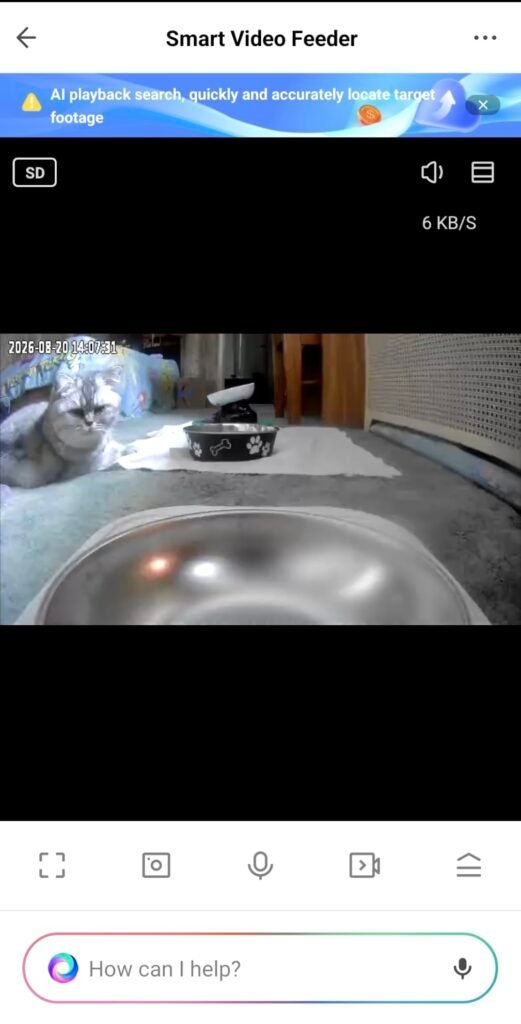
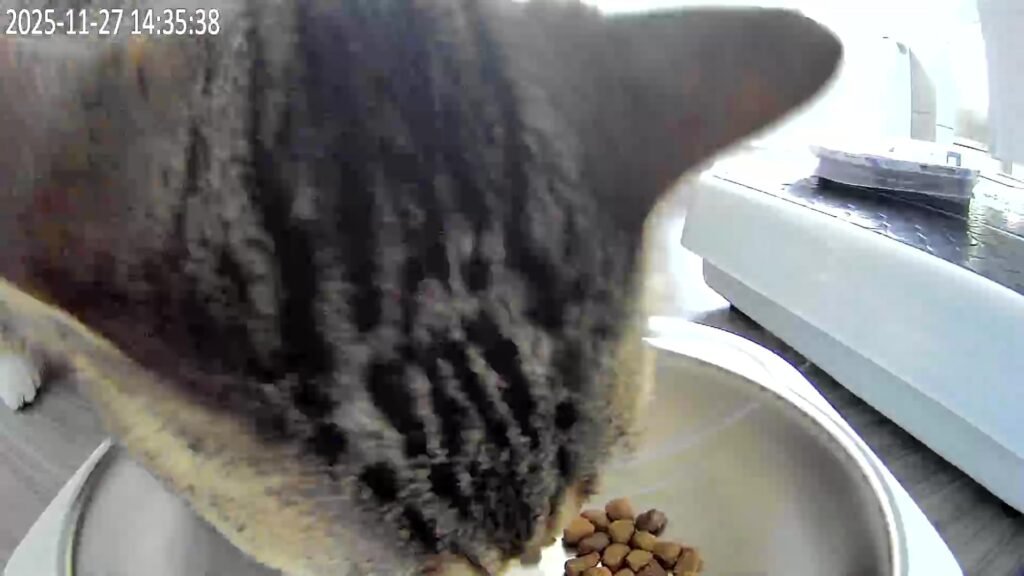
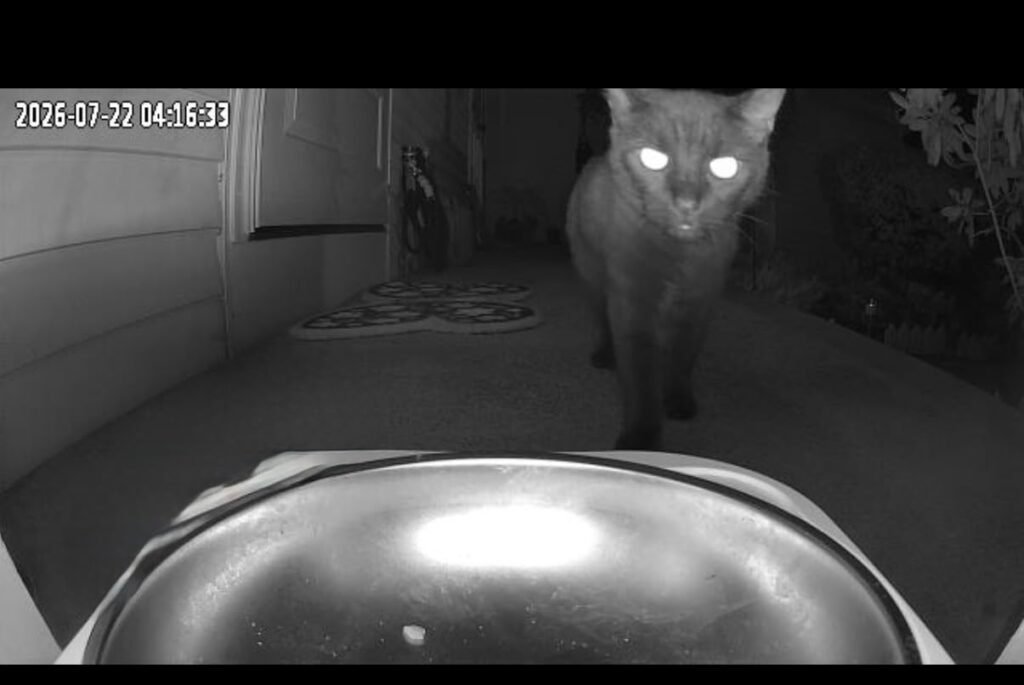
The Frienhund 7L feeder is the pick for buyers who want full smart home integration with their pet feeding routine. The built-in 2K camera with infrared night vision lets you check on your pet from anywhere, and the two-way audio feature lets you talk to them in real time. For anyone who travels frequently or works long hours, this connectivity turns a simple feeder into a way to stay engaged with your pet throughout the day.
We may earn a commission when you buy through this link, at no additional cost to you.
Meal scheduling is remarkably flexible, supporting up to 15 meals per day with a maximum of 20 portions per meal. This range handles everything from single-cat routines to multi-pet households with different feeding needs. The mobile app tracks feeding history and lets you view remaining food levels via the camera, which is genuinely useful for spotting problems before your pet runs out of food while you are away.
Dual-band Wi-Fi supporting both 2.4GHz and 5GHz networks is a meaningful reliability upgrade. Most smart feeders only support 2.4GHz, which forces you to configure separate network channels or accept slower, more congested connections. The 5GHz option provides faster, more stable video streaming, which matters when you actually want to check on your pet in real time rather than waiting for buffering.
Many smart pet feeders only support 2.4GHz Wi-Fi, which can create connectivity issues in homes with modern routers that prioritize 5GHz for faster devices. Dual-band support eliminates the need to create a separate 2.4GHz network or split your router’s SSID to accommodate the feeder. Faster 5GHz connections also improve video streaming quality when using the built-in camera, giving you clearer real-time views of your pet.
This feeder is the right pick for buyers who want the most connected experience and value camera monitoring alongside feeding automation. The 7L capacity handles multiple pets or extended absences, and the stainless steel bowl is dishwasher safe for hygiene. Buyers who prefer simpler operation without app dependencies should look at the ANDOLL HOME or oneisall two-cat models instead.
Not for buyers who want simple operation without app or Wi-Fi dependencies.
We may earn a commission when you buy through this link, at no additional cost to you.
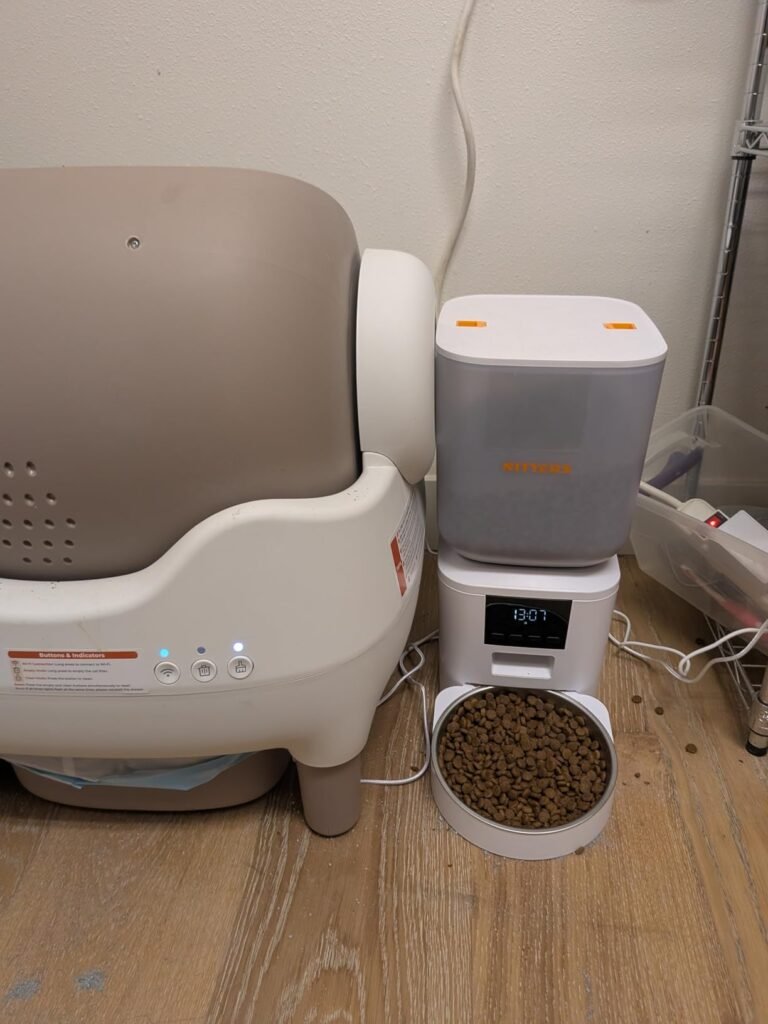
The 8L automatic feeder is the pick for buyers with larger dogs, multiple pets, or extended travel plans that require weeks of food capacity. The 8L hopper holds up to 34 cups of dry food, which can sustain a single pet for close to a month between refills. This kind of capacity eliminates the need for pet sitters solely to refill food during longer absences, though someone should still check on your pet for other care needs.
We may earn a commission when you buy through this link, at no additional cost to you.
Portion control is impressively granular with a 1-50 portion range where each portion equals approximately 1/16 cup. This makes it easy to dial in precise daily intake for pets on weight management plans or those with medical dietary requirements. Up to 6 scheduled meals per day supports a small-and-often feeding pattern that many veterinarians recommend for optimal digestion and weight control.
The 6.7-inch stainless steel bowl is sized to reduce whisker anxiety in cats while allowing dogs to take comfortable bites. Stainless construction prevents the chin acne and plastic allergies that can develop with plastic bowls over time, and the bowl is easy to remove for cleaning. A heavier, wider base with non-slip pads reduces the chance of tipping, which matters most with active or larger pets that might otherwise knock over lighter feeders.
Larger feeders take up more counter or floor space, but the capacity pays off when you travel frequently, have multiple pets, or want to minimize hopper refills. A month of food between fills also means fewer opportunities for kibble to go stale from repeated air exposure. For single-cat households that see the owner daily, a smaller 4L feeder is often more practical. For extended absences or multi-pet homes, the 8L capacity earns its footprint.
This feeder is the right pick for buyers who need maximum capacity in a single-bowl format and want stainless steel bowl construction. The Type-C adapter plus 4 AA battery backup provides continuous operation during power outages. Buyers with pets that eat large kibble should verify their food size fits within the 18mm limit, and buyers with smaller spaces may find the footprint too bulky for typical placement.
Not for small spaces, pets on large kibble over 18mm, or buyers who prefer a compact footprint.
We may earn a commission when you buy through this link, at no additional cost to you.
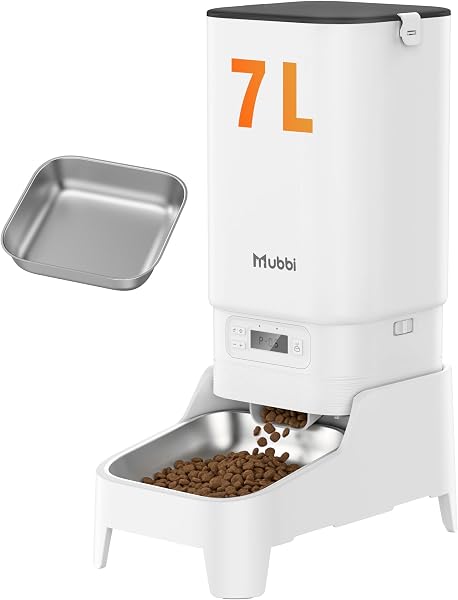
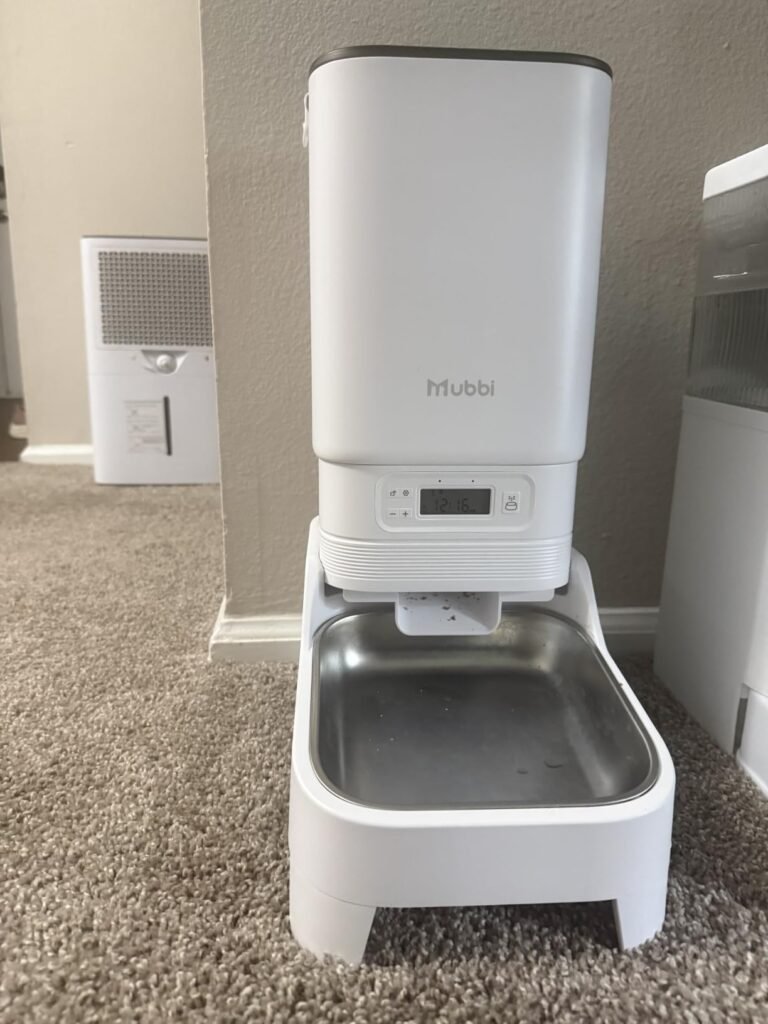
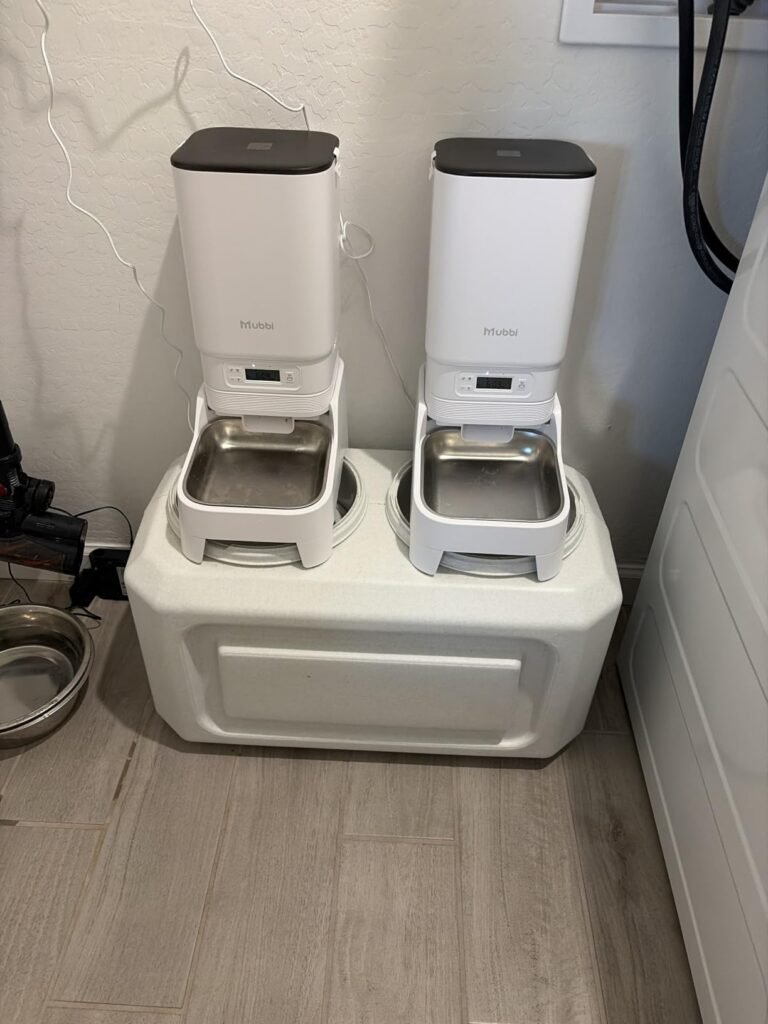
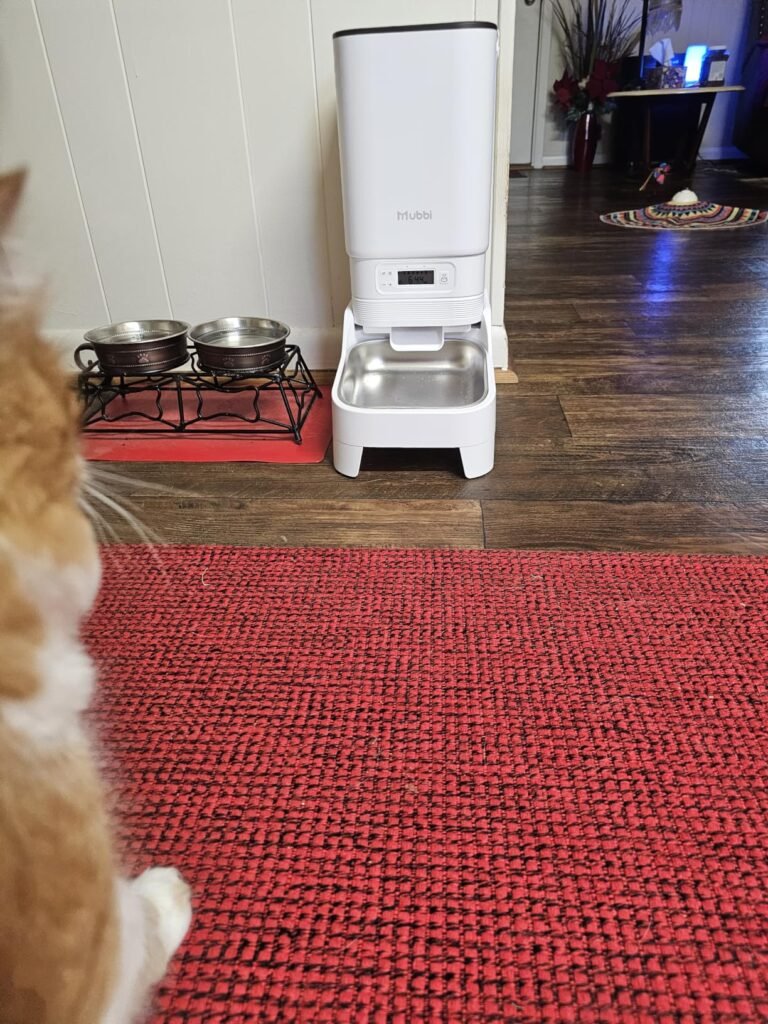
The MUBBI 7L feeder is the pick for buyers who want an elevated bowl height without buying a separate feeder stand. Four removable support legs let you adjust the bowl to a comfortable height for your pet, which reduces spinal pressure during eating and helps larger dogs or older pets with joint issues. For pets that would benefit from an elevated feeding position, this integrated design saves the cost and hassle of a separate stand.
We may earn a commission when you buy through this link, at no additional cost to you.
The anti-clog design uses a high-performance rotor with smart reverse rotation technology, which actively prevents the kibble jams that plague many feeders. If food starts to bind in the dispenser, the rotor reverses briefly to clear the blockage before continuing. This active anti-jam approach is more reliable than passive designs that hope kibble simply flows without intervention.
The 7L capacity provides up to 28 days of food for cats or 7-14 days for small to medium dogs, backed by desiccant packets and a sealed lid to maintain freshness. The triple-lock mechanism on the lid, hopper, and control panel blocks the mischievous paws that can defeat single-latch designs. The bite-resistant Type-C power cable is a small but appreciated durability upgrade for households with pets that chew cables.
Elevated bowls can reduce strain on a pet’s neck, spine, and joints during eating, which is especially beneficial for older pets, larger breeds, and pets with arthritis or mobility issues. The elevation also helps some pets swallow more comfortably and can reduce the amount of air swallowed during meals, which may help pets prone to bloat. For young, healthy pets on the smaller side, floor-level bowls are generally fine, but larger or older pets often benefit noticeably from a raised position.
This feeder is the right pick for buyers who value elevated feeding positioning and want active anti-jam protection. The 2-15mm kibble size compatibility is generous and covers most cat and small dog foods. Buyers with pets that eat larger kibble or those who prefer a floor-level bowl should look at other options in this guide that match their specific needs.
Not for pets eating kibble outside the 2-15mm range or buyers who prefer floor-level bowls.
We may earn a commission when you buy through this link, at no additional cost to you.
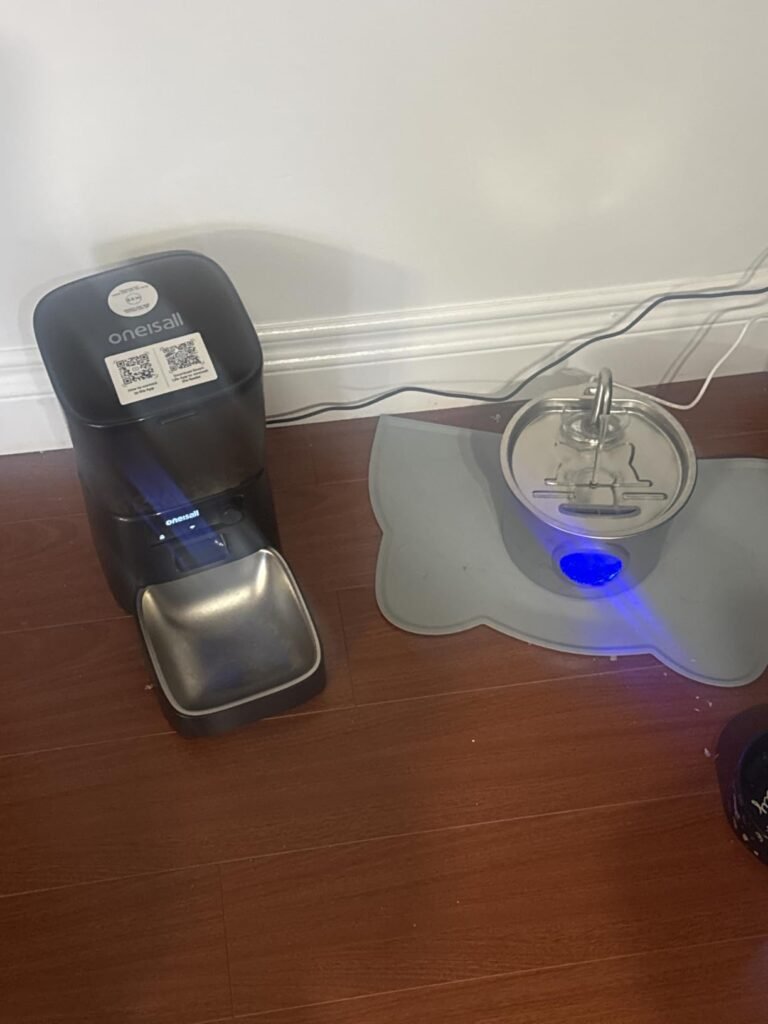
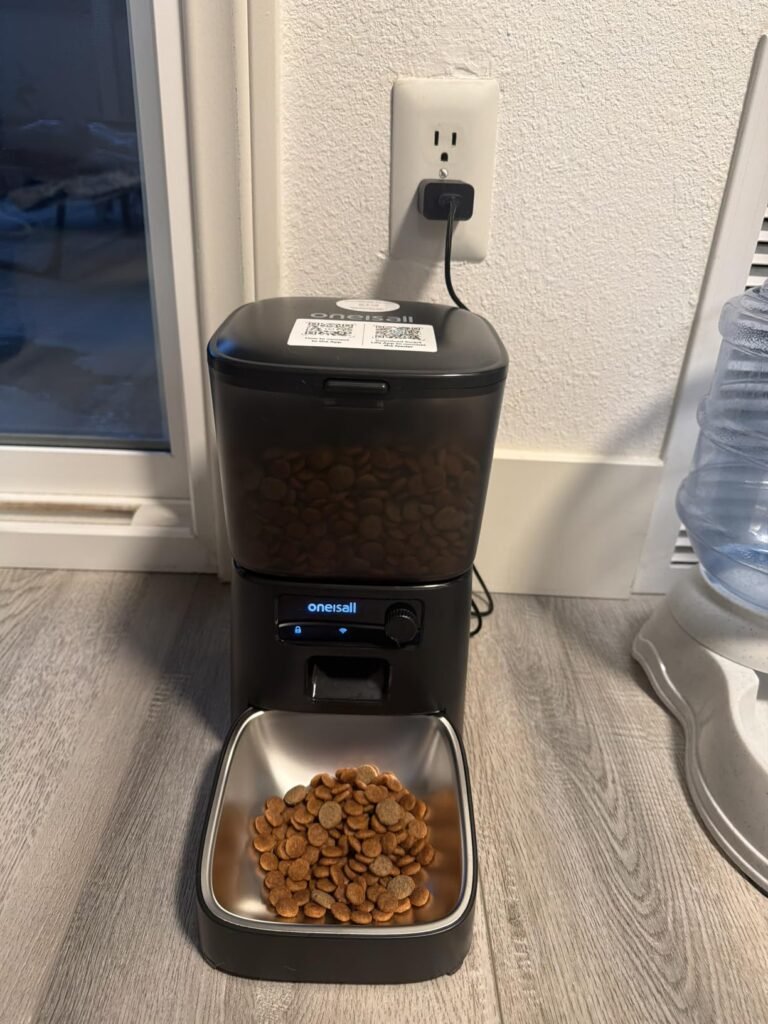
The oneisall Wi-Fi feeder is the pick for buyers who want app-based remote control without the added cost or complexity of a built-in camera. Setting or adjusting feeding schedules from your phone eliminates the button-press process that dial-based feeders require, and it lets you make changes even when you are away from home. This is particularly useful for pets on evolving feeding plans or during travel.
We may earn a commission when you buy through this link, at no additional cost to you.
Portion granularity is strong with 1-36 portions per meal at approximately 7 grams each, and the feeder supports 1-10 meals per day. This wider meal frequency range accommodates cats that benefit from small frequent meals or pets on complex feeding schedules. The 3.5L capacity holds about 15 cups of dry food, which sustains an adult cat for roughly 15 days between refills.
The shared family control feature is a genuinely useful practical touch. Multiple family members can add the feeder to their app accounts, so anyone in the household can check feeding history or make adjustments without waiting for the primary user to be available. Battery backup automatically maintains scheduled feedings during power outages, though Wi-Fi and app features are disabled during battery operation.
Households where multiple people care for a pet often struggle with communication about who fed the pet and when. Shared app access lets everyone in the household see feeding logs, adjust schedules, and confirm meals were dispensed. This eliminates the double-feeding that can happen when two people both try to feed manually and reduces the confusion that leads to missed or duplicated meals.
This feeder is the right pick for buyers who want smart connectivity focused on scheduling rather than video monitoring. The only 2.4GHz Wi-Fi support is a modest limitation that requires the appropriate network configuration. Buyers who want camera monitoring should step up to the Frienhund, while buyers who prefer simple dial operation should look at the oneisall two-cat or ANDOLL HOME models instead.
Not for buyers who need camera monitoring, two-way audio, or dual-band Wi-Fi support.
We may earn a commission when you buy through this link, at no additional cost to you.
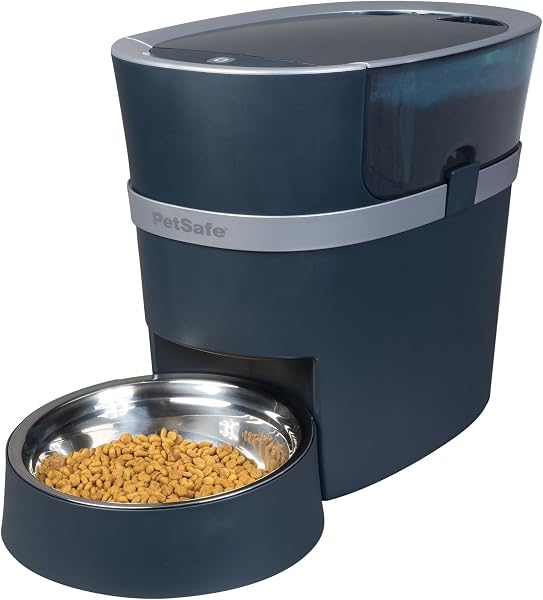
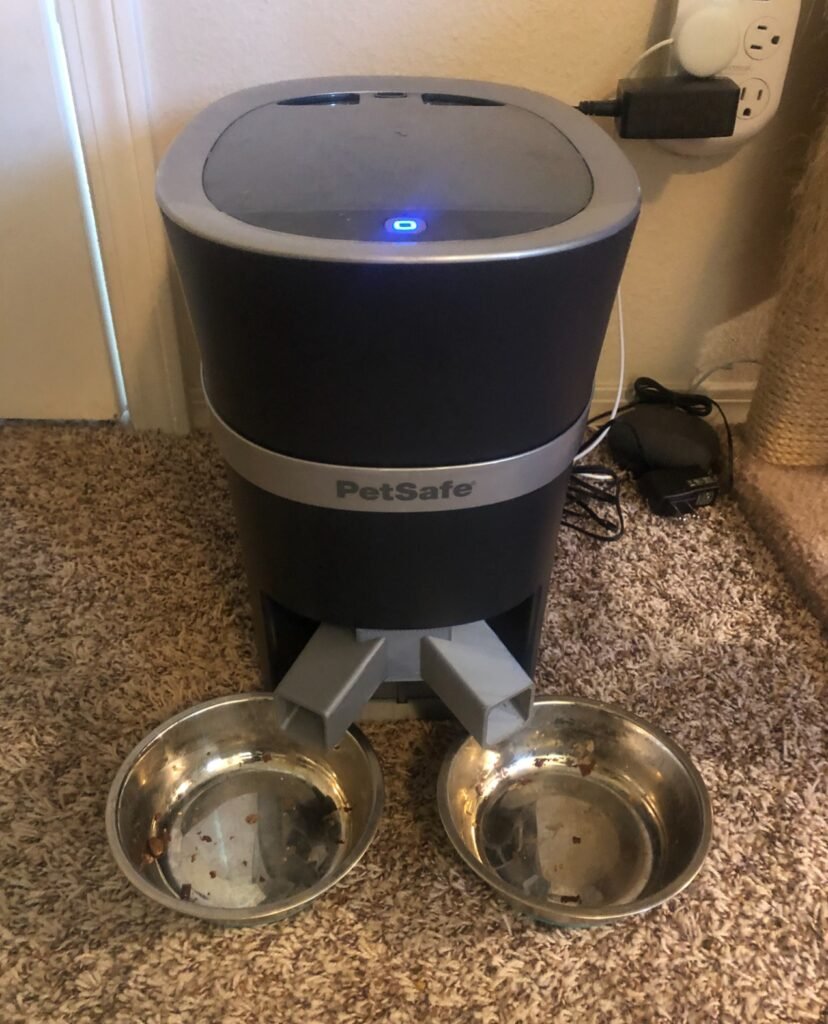
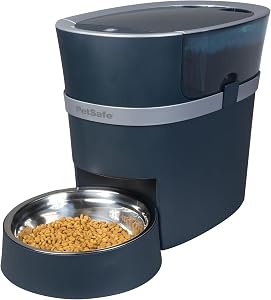
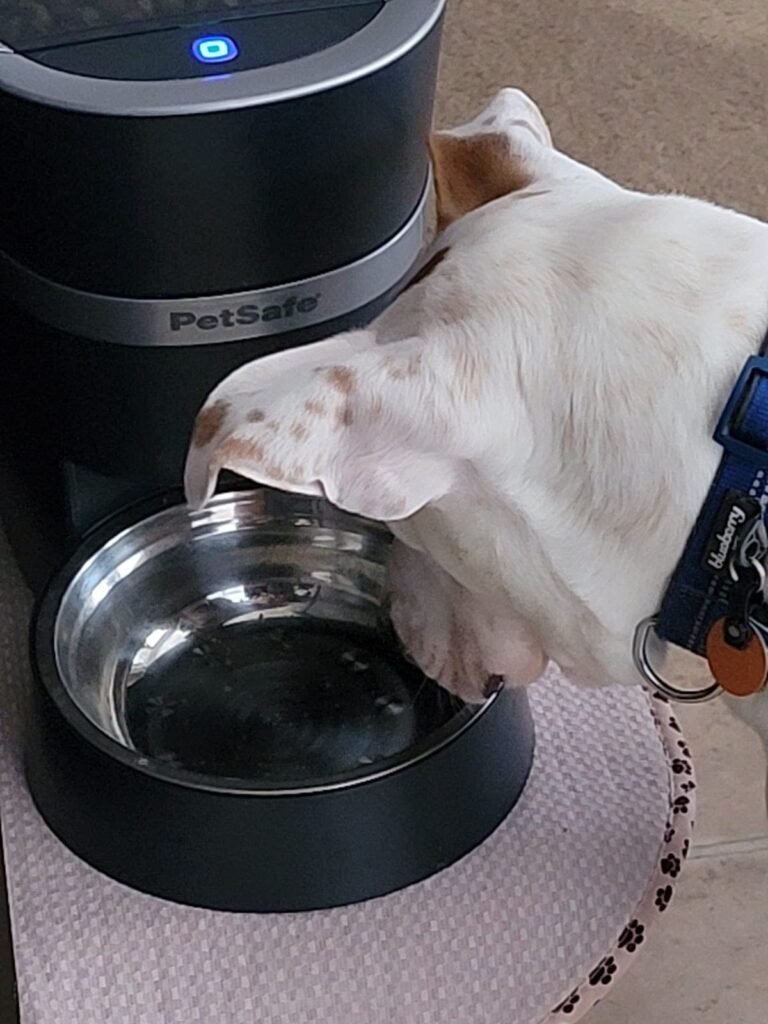
The PetSafe Smart Feed is the pick for buyers who are deeply integrated with the Amazon ecosystem and want voice control alongside app-based scheduling. Asking an Amazon Echo device to feed your pet a snack is a genuinely convenient feature when you notice your pet begging or you want to reinforce good behavior with a treat. This kind of voice integration is rare in the automatic feeder category.
We may earn a commission when you buy through this link, at no additional cost to you.
The Slow Feed setting is a distinctive feature that addresses a real problem for pets that eat too quickly. When enabled, meals larger than 1/8 cup dispense in small amounts over 15 minutes rather than all at once. This helps prevent bloat and improves digestion for pets prone to rapid eating, and it can extend the enjoyment of mealtime for pets that would otherwise vacuum food in seconds.
Scheduling flexibility supports up to 12 meals per day with portions ranging from 1/8 cup to 4 cups, making it suitable for pets on frequent small-meal diets or for larger dogs that need bigger portions less often. Smartphone notifications alert you when the feeder is running low or if an error occurs, and Amazon Dash Replenishment can automatically reorder pet food when levels drop. The lid, hopper, bowl, and bowl holder are top-rack dishwasher safe.
Pets that eat quickly are prone to bloat, digestive upset, and vomiting from swallowing air along with food. Slow feed mode addresses this by dispensing meals in small increments over 15 minutes, which forces pets to eat at a healthier pace. This is particularly important for large dogs prone to gastric dilation-volvulus, a life-threatening condition often triggered by rapid eating of large meals.
This feeder is the right pick for buyers who value voice control and slow feed functionality above other considerations. The 4.0 owner rating suggests some buyers experience reliability variability, so weight that feedback against the unique features when deciding. Buyers deeply invested in Amazon smart home systems will find the ecosystem integration hard to match with other options.
Not for buyers outside the Amazon ecosystem or those who want dual-band Wi-Fi and camera features.
We may earn a commission when you buy through this link, at no additional cost to you.
Picking the right automatic pet feeder means balancing capacity, scheduling flexibility, connectivity, and reliability with your pet’s specific needs. The factors below walk through the decisions that most affect daily reliability and long-term satisfaction, so you can choose a feeder that becomes a trusted part of your pet care routine.
Hopper capacity determines how often you need to refill the feeder, which directly affects how useful it is during travel or busy periods. Small feeders in the 3.5L to 4L range hold roughly 15-17 cups of dry food and sustain a single cat for 1-2 weeks depending on portion size. Mid-size feeders at 5L to 7L capacity handle multi-pet homes or provide 3-4 weeks of food for a single pet. Large 8L feeders can sustain most pets for close to a month between refills.
Refill frequency also affects food freshness. Kibble loses aroma and palatability when exposed to air, so a smaller hopper that gets emptied and refilled weekly may actually preserve freshness better than a larger hopper filled once a month. Feeders with desiccant compartments and sealed lids extend freshness significantly, but the trade-off between capacity and freshness is worth considering based on how often you can practically refill.
Match capacity to your travel patterns and pet count. Single-cat homes with regular refills work well with 3.5-4L, while multi-pet or frequent-travel households benefit from 6-8L capacity.
Portion accuracy and scheduling flexibility determine how well the feeder can match your pet’s dietary needs. Basic feeders offer coarse portion increments and limited meals per day, which is fine for pets on simple free-feed or twice-daily schedules. Advanced feeders like the 8L model with 1-50 portions per meal or the PetSafe Smart Feed with 12 meals per day give you the granularity to manage weight loss diets, medical feeding schedules, or small-frequent-meal routines.
Consider how many meals your pet actually needs per day. Most cats do well on 3-4 meals, while some cats and many small dogs benefit from more frequent smaller meals. Pets on strict veterinary diets may need very precise portions that require fine-grained portion control. If your pet is on a stable free-feed or simple schedule, extensive scheduling flexibility is less important than reliable dispensing.
Prioritize portion granularity for pets on weight management or medical diets. Prioritize meal frequency for pets that benefit from small frequent meals. Both matter less for pets on simple twice-daily routines.
Kibble jams are the most common complaint about automatic feeders and the source of most missed meals. Passive designs rely on kibble simply flowing through the dispenser mechanism, which works well until food gets stuck. Active anti-jam designs, like the MUBBI’s smart reverse rotation rotor or the ANDOLL HOME’s swinging distribution system, actively work to clear blockages before they interrupt a scheduled meal.
Kibble size compatibility varies significantly between feeders. Most feeders work well with kibble in the 2-15mm range, but some have stricter limits. The 8L feeder specifies kibble under 18mm, while the oneisall two-cat model requires kibble under 0.5 inches. Always verify that your pet’s specific food fits within the feeder’s specifications before buying, as kibble that is too large will jam repeatedly regardless of anti-jam features.
Choose active anti-jam mechanisms if reliability is your top priority. Always confirm kibble size compatibility with your specific pet food before purchase.
Power reliability is critical for any feeder your pet depends on. Every feeder in this guide offers dual power supply, combining an AC adapter for daily operation with battery backup for outages. This dual-power design is essentially a requirement rather than a nice-to-have, since even a brief power outage can cause missed meals if there is no backup.
Battery type varies between feeders and affects ongoing cost. AA batteries are inexpensive and widely available, while D-cell batteries provide longer runtime but cost more. Type-C USB power adapters offer the most modern connectivity and can potentially be powered by portable battery banks in extended outages. Consider whether you want to keep specific battery sizes stocked at home for the feeder’s backup.
Always choose feeders with battery backup capability. AA batteries offer the best balance of cost, availability, and runtime for most households.
Connectivity ranges from none at all on simple dial-based feeders to full smart home integration with cameras, two-way audio, and voice assistant compatibility. Basic feeders with dial or button programming are the most straightforward to set up and eliminate app dependencies, which some buyers prefer for reliability. Wi-Fi enabled feeders let you adjust schedules remotely, monitor feeding history, and receive notifications about food levels or errors.
Camera-equipped smart feeders like the Frienhund add real-time video monitoring, which is genuinely valuable for buyers who travel frequently or want to check on their pets during the workday. Two-way audio adds the ability to talk to your pet, which can be reassuring for pets with separation anxiety. Voice assistant integration through Amazon Alexa lets you dispense treats hands-free from anywhere in your home.
Skip smart features if you value simple reliability. Add Wi-Fi if you want remote scheduling changes. Add camera and two-way audio if you travel frequently and want to stay engaged with your pet.
Bowl material affects hygiene, pet health, and long-term durability. Stainless steel bowls, found on many feeders in this guide, resist bacteria growth, prevent chin acne that plastic bowls can cause, and typically survive dishwasher cleaning without warping or discoloring. Plastic bowls are lighter and often cheaper but can develop scratches that harbor bacteria and may cause allergic reactions in sensitive pets.
Cleaning ease depends on how many parts disassemble and how thoroughly you can access food-contact surfaces. Feeders with removable food hoppers, bowls, and dispenser rotors are dramatically easier to clean properly than designs where components are permanently attached. Dishwasher-safe parts add another level of cleaning convenience, especially for busy households.
Prioritize stainless steel bowls for hygiene and durability. Choose feeders with extensively removable parts to make regular deep cleaning practical.
Freshness features determine how well the feeder maintains kibble quality between refills. Sealed lids prevent air exposure, and desiccant compartments actively absorb ambient moisture that would otherwise stale the food. Feeders like the ANDOLL HOME with dedicated desiccant boxes and the MUBBI with replaceable desiccant packs take this seriously, while budget designs may only include basic lid sealing.
Kibble quality directly affects whether your pet actually eats scheduled meals. Stale food is one of the top reasons pets refuse meals from automatic feeders, particularly cats who are more sensitive to food aroma than dogs. If your pet is picky or you fill the hopper infrequently, prioritizing freshness features pays off in fewer refused meals and less wasted food.
Prioritize sealed lids and desiccant compartments for picky pets or infrequent refills. These features matter less for pets that eat readily and hoppers that empty quickly.
Set up the feeder well before you actually need to rely on it, ideally at least a week before any trip or extended absence. This gives you time to verify the scheduling works correctly, confirm your pet accepts the dispensed portions, and identify any kibble compatibility issues before the feeder needs to work unattended. Test each scheduled meal by watching the first few dispensing cycles to make sure kibble flows smoothly without jams.
Clean the feeder regularly to maintain hygiene and prevent kibble oils from building up on food-contact surfaces. Empty the hopper completely at least monthly, remove all disassembly parts, and wash them with mild soap and warm water. Stainless steel bowls can typically go in the dishwasher, but check the feeder documentation before putting electronic components or plastic parts through high heat cycles. Replace desiccant packs monthly or according to the feeder specifications to maintain moisture control.
Install fresh backup batteries before every long trip, even if the previous batteries seem fine. Battery voltage can drop unexpectedly, and a partial charge is not enough to reliably power the feeder through an outage. Store the feeder power adapter in an accessible location so you can quickly restore wall power after outages, and consider a small uninterruptible power supply if your area has frequent brief power interruptions that might not trigger the battery backup cleanly.
Capacity depends on your pet count, meal size, and refill frequency. A single cat eating 1/2 cup daily uses about 15 days of a 15-cup hopper, while two cats or a small dog will empty the same hopper in half that time. For most single-pet households refilling weekly, 3.5-4L is sufficient. For multi-pet homes or frequent travelers, look at 6-8L capacity for extended coverage.
Most of the feeders in this guide are designed exclusively for dry kibble and are not suitable for wet food. Wet food requires a different design with cooling or ice packs to prevent spoilage. If your pet eats wet food, look at feeders specifically designed for that purpose rather than trying to adapt a dry-food feeder, which will result in spoiled food and potential health issues for your pet.
Most feeders work with kibble in the 2-15mm diameter range, which covers standard cat food and small-to-medium dog food. Larger kibble may jam the dispensing mechanism, so always check the feeder's specifications against your specific food. If you feed large-breed dog kibble, look for feeders that specify compatibility with kibble up to 18mm or larger, and consider anti-jam designs like the MUBBI's reverse rotation rotor.
All the feeders in this guide include battery backup for power outages, which is essentially a requirement for reliable operation. However, smart features like Wi-Fi and cameras typically disable during battery operation to preserve battery life, so scheduled meals continue but remote monitoring may be unavailable. Always install fresh backup batteries before extended absences to ensure reliable outage coverage.
Single-bowl feeders can work for multiple pets that get along well, but competition and unequal distribution are common problems. For multi-cat homes, the oneisall Two-Cat Feeder with its twin-bowl design solves this by giving each cat their own eating space. For homes with more pets or those where pets have different dietary needs, individual feeders may be a better solution than trying to share a single dispenser.
Wipe the bowl daily to remove kibble dust and any residual food particles that can attract pests or grow bacteria. Deep clean the entire feeder monthly by emptying the hopper, disassembling removable parts, and washing them with mild soap and warm water. Replace desiccant packs monthly or per the feeder specifications, and check for any kibble buildup in the dispensing mechanism that could cause future jams.
Smart feeders with Wi-Fi and app control are worth it if you travel frequently, want to adjust schedules remotely, or value features like feeding logs and low-food notifications. Camera-equipped feeders like the Frienhund add real-time video monitoring, which is genuinely useful for engaged pet owners. However, smart features add complexity and potential failure points, so buyers who prioritize simple reliability may prefer dial-based feeders like the oneisall Two-Cat model.
Kibble jams are the most common feeder problem and typically cause missed meals until manually cleared. Modern feeders with active anti-jam designs, like the MUBBI's reverse rotation rotor, actively work to prevent and clear blockages. Smart feeders with app notifications will alert you if a scheduled meal fails to dispense properly, so you can arrange for someone to clear the jam. This alert feature alone can justify the smart feeder premium for buyers who travel frequently.
Most pets adapt to automatic feeders within a few days, especially cats and dogs already accustomed to scheduled meals. The voice recording feature on many feeders helps by creating an audio cue your pet learns to associate with mealtime. Start by placing food in the feeder bowl at normal meal times, then gradually let the feeder dispense meals while you supervise. Most pets figure out the routine quickly, though some may take a week or two to fully adjust.
Automatic feeders handle scheduled meals reliably, but they do not replace the other care needs pets have during extended absences. Cats still need litter box cleaning, fresh water, and social interaction. Dogs need bathroom breaks, exercise, and companionship. For weekend trips, a feeder combined with an automatic waterer may be sufficient. For longer absences, arrange for someone to check on your pet regularly even if the feeder handles meals.
The oneisall Two-Cat Feeder stands out as the strongest overall pick for its target use case because it solves the real problem of multi-cat feeding through its twin-bowl design with 16-inch spacing. Each cat gets a peaceful eating space, the 5L hopper sustains two adult cats for about 10 days, and the dial-based setup keeps operation simple. For any household with two cats, this feeder delivers a meaningful daily improvement over shared-bowl alternatives.
Different needs point to different picks. Single-pet households on tight budgets should look at the ANDOLL HOME 4L for its solid feature set at an accessible price. Buyers who want full smart home integration with camera monitoring benefit from the Frienhund 7L model. Extended-travel households and multi-pet homes are well served by the 8L feeder for maximum capacity, while the MUBBI 7L adds elevated bowl positioning for pets that need it. The PetSafe Smart Feed offers unique Alexa integration and slow feed mode for buyers deep in the Amazon ecosystem.
The right choice starts with an honest look at your pet count, travel patterns, and connectivity preferences. Match capacity to how often you can refill, choose portion granularity based on your pet's dietary needs, and add smart features only if you will actually use them. Any feeder in this guide will provide reliable service when paired to the right use case, so focus less on chasing the most features and more on the model that fits your specific household and pet care routine.